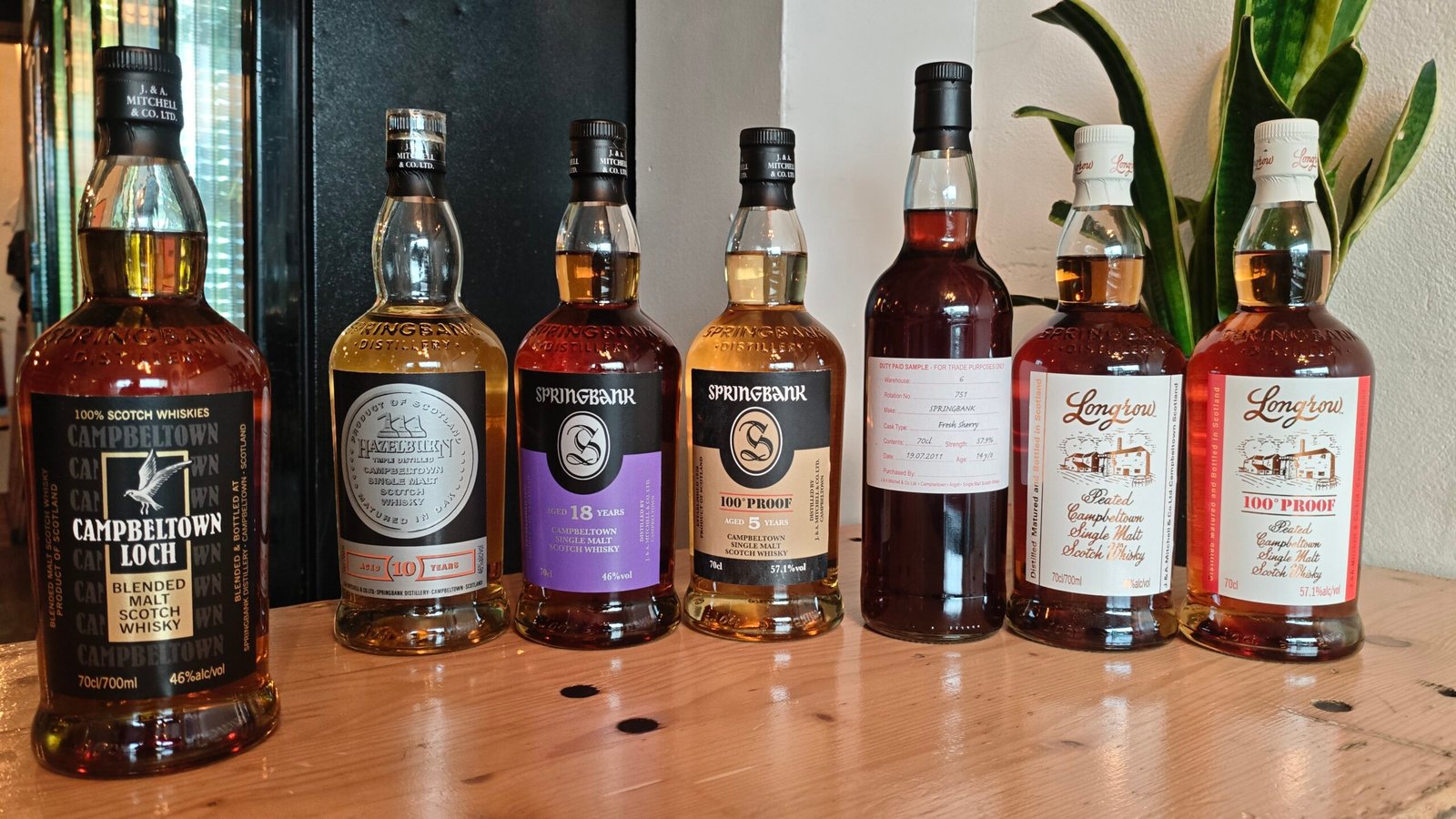
A very special chance indeed to hear from one of the quietest & buzziest distilleries around
When: 7th May 2026
Where: Thirsty
Springbank Distillery is a pretty big deal. One of only 3 active distilleries in Campbeltown, one of the 5 official Scottish whisky regions, they were instrumental in saving the region (their parent company opened the 3rd distillery in the region to fulfil the criteria that the Scotch Whisky Association set for region-eligibility… 3 distilleries). Campbeltown was once the whisky capital of Scotland, with over 30 distilleries, but from that 19th-century heyday, with improvements in transport on the mainland and periodic declines in sales, it found itself with only 2 distilleries at the turn of the millennium. The Scotch Whisky Association was redrawing its whisky region boundaries around the same time and informed Springbank and Glen Scotia distilleries (the Campbeltown survivors) that Campbeltown would be losing its status, as it didn’t meet the 3-distillery requirement. Cue J. & A. Mitchell & Co. (the owners of Springbank Distillery) buying the vacant buildings left over from one of the lost distilleries nearby, renovating them and saving the region’s place on the whisky map. The particular lost distillery was once part of the family business that still runs Springbank, and now Glengyle (which sells its whisky under the Kilkerran name as the Glengyle trademark was lost to Loch Lomond).
But, being literal whisky saviours isn’t the only impressive thing about Springbank Distillery. They have been perfecting their site and their style over some 200 years. They aren’t a massive factory operation, they’re a small-scale, family-run business. With the downturn in whisky at the end of the 20th century, they ended up ceasing distillation between 1979 and 1987, just bottling the aging stocks they already had. But come 1988, when it was time to start again, the leadership at the time decided low and slow was the way to go, rather than following the industry trends and movements too closely. And, they still follow that mentality. They do all of the stages of production on site, from malting their barley to bottling their whisky. They take great care in producing their whisky and in choosing their ingredients, and all of that has built them a strong reputation for high-quality spirit. Demand for their bottles is high, and growing. Their releases regularly disappear off shelves and websites in minutes, but they don’t inflate their prices; they believe their whisky should be drunk, not collected, and feel that high prices incentivise or facilitate the latter. They aren’t undertaking vast expansion plans, because that low and slow philosophy has served them well.
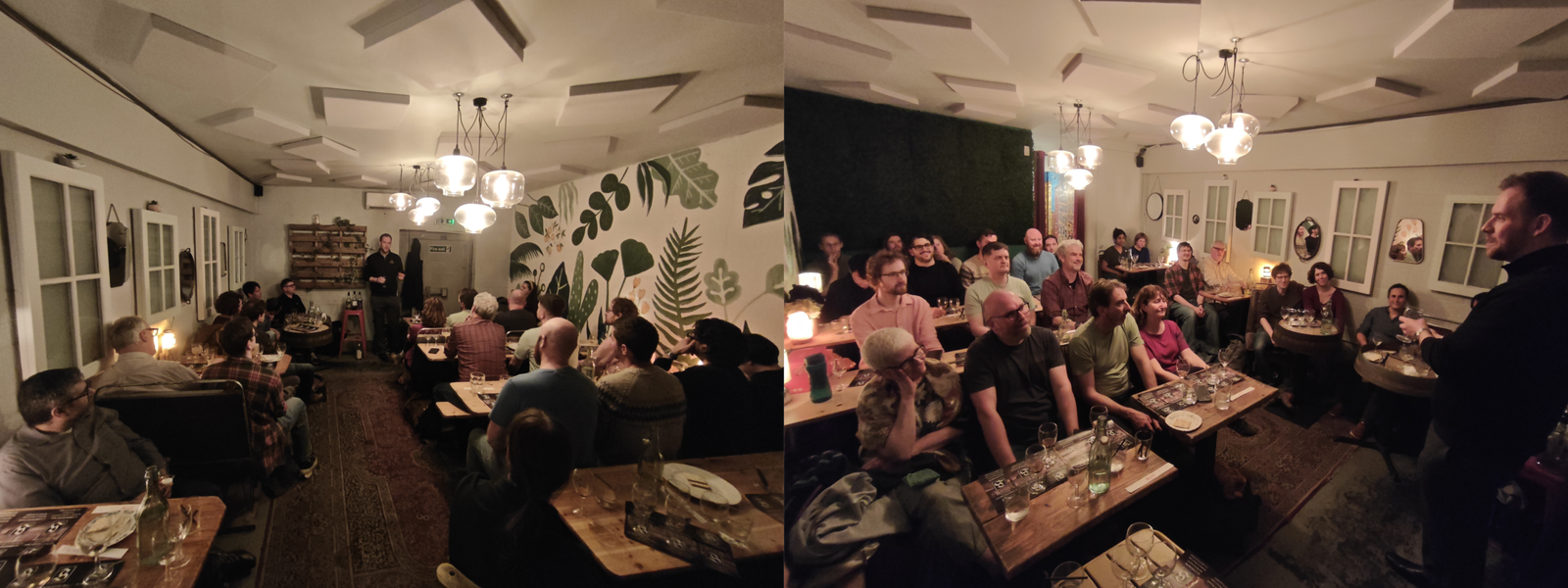
That is not say that they’re resting on their laurels though. Andrew, our host for the evening, having travelled all the way from Campbeltown on a little tour round London, Cambridge and York, told us that slumbering in their warehouses are casks of whisky made not from oak, but acacia, chestnut, and cherrywood. When an excited room asked him what the plan was, he said there wasn’t one, just a curious experiment that might never see the light of day. He also told us that when the SWA found out Springbank received a letter asking if they knew about the oak-only rule for Scotch whisky – the reply went back that, yes, after 200 years they understood perfectly well!
The Whisky
(Click on the images to buy a bottle)
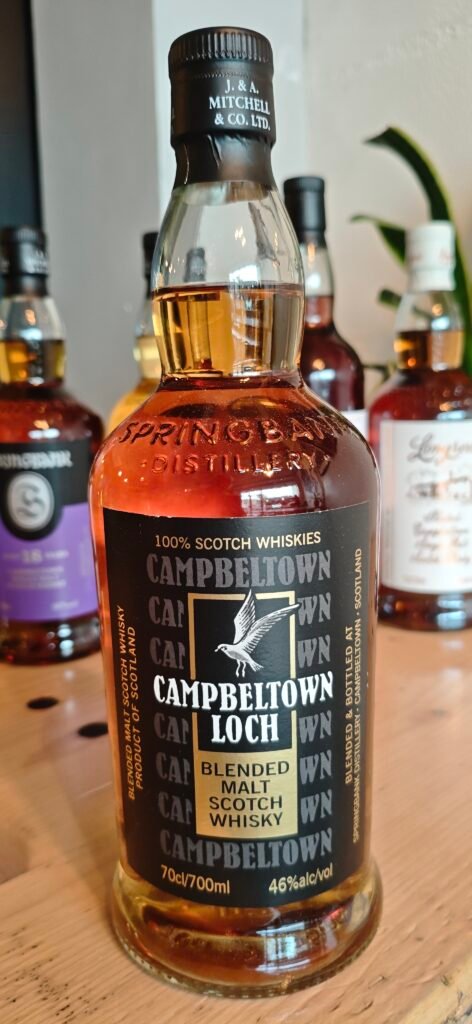
Campbeltown Loch
Blended Malt Scotch Whisky – 46%
In a very civilised shake-up, Andrew had brought us a bottle intended as a welcome drink. As our event attendees entered, we made sure everyone had a sample of Campbeltown Loch to enjoy. Featuring malt whisky from the 3 active distilleries in the region and bottled by J. & A. Mitchell, this blend aims to capture a Campbeltown style: funky, coastal, approachable.
I’ve tried it a few times now, and speaking to a few shop owners I think it gets dismissed a little as ‘not Springbank’. While that’s true, it would seem unfair, as in its own right this is a tasty, affordable whisky with a fairly high availability and absolutely deserves a place in your glass.
Notes: 📝Limey, agave, funky, brown sugar grassy rum, milk chocolate, cola, distant musty earth.

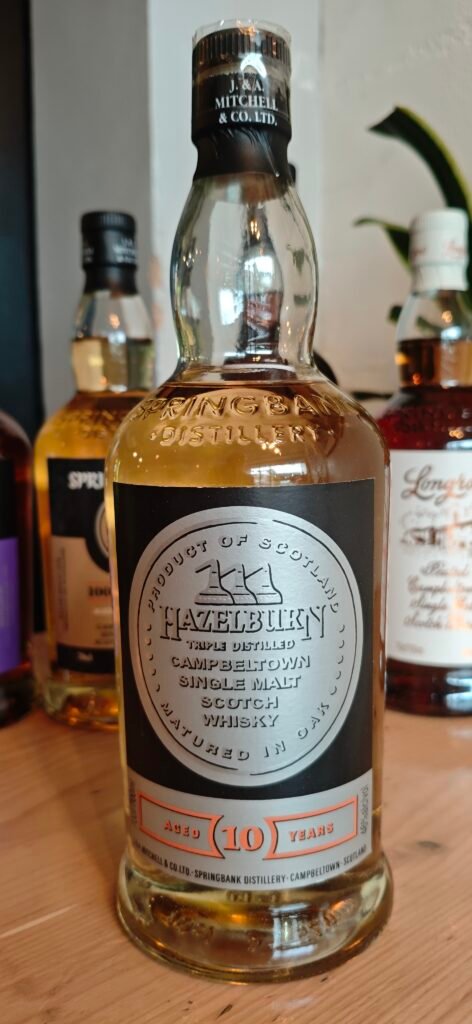
Hazelburn 10yo – 2025
Single Malt Scotch Whisky – 46%
Dram-proper number 1 saw us beginning at the beginning. Springbank Distillery produces 3 types of spirit released under different names: the ‘heavily’ peated Longrow, the lightly peated eponymous Springbank, and the unpeated Hazelburn. Hazelburn is triple distilled using all 3 of the stills at the distillery in a chain – hence the stills on the label.
It was first produced in 1997 and was the idea of a new distiller who had recently joined from Bushmills in Northern Ireland. Andrew told us that when the distillery was searching for something new to produce, the new distiller said that he knew how to make smooth triple distilled spirit, so that’s what they did.
It only makes up a small proportion of the production of the distillery each year, so it’s relatively rare, even for Springbank. In fact, Andrew explained that if you can find 2023 releases of the Hazelburn 10, then these are quite special as they contain a larger ratio of much older stock than normal, due to warehouse shortages. Realising this wasn’t a particularly profitable approach, they held off releasing Hazelburn 10 for a couple of years. This 2025 expression is actually the first release since that pause. It is aged exclusively in bourbon barrels.
Notes: 👃🏻Creamy grain, plasters/TCP, beef burger, lemon sherbert 👄Lemon funk, vanilla, wood spice, pineapple/peach.
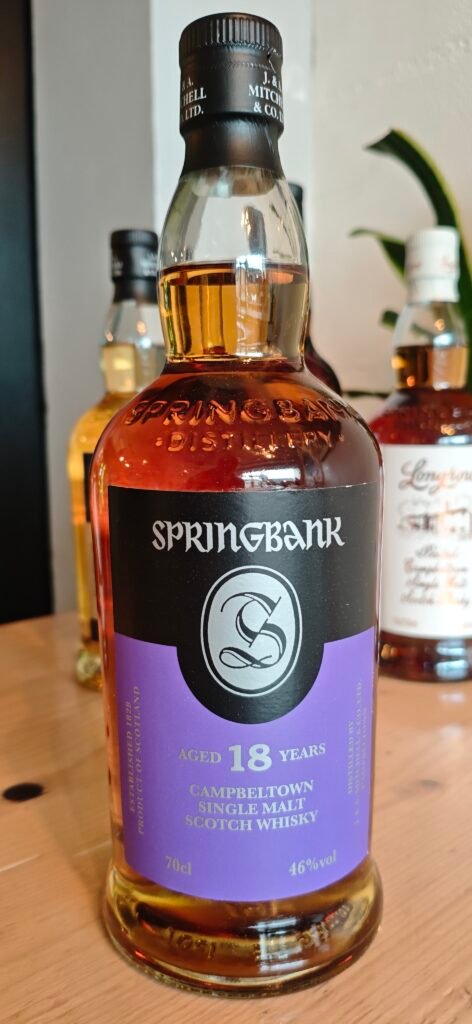
Springbank 18 – 2026
Single Malt Scotch Whisky – 46%
The 2nd bottle of the tasting is another victim of the cask limits within the warehouse, leading to a yearly release schedule. Springbank is lightly peated, and this particular 2026 edition of the 18yo is aged in a mix of bourbon, sherry and rum casks – the distillery works with the casks they’ve got, so batches can change over time.
Where Hazelburn was triple distilled, Springbank is claimed to be 2.5x distilled, a process which Andrew explained. The ‘beer’ is first distilled to make the low wines, which are split into 2 vats. One vat is distilled again and recombined with some of the second vat for a subsequent, final distillation. It sounds unusual, because it is, but it’s a perfect example of the expertise that Springbank distillery has honed and how they are confident in their craft.
Notes: 👃🏻Fresh soft smoke waft, banana bread, some red berry, paprika parsnip crisps 👄Spicy, cough syrup, jammy, a little ash, sweet nuts, sticky, diesel, white grape.
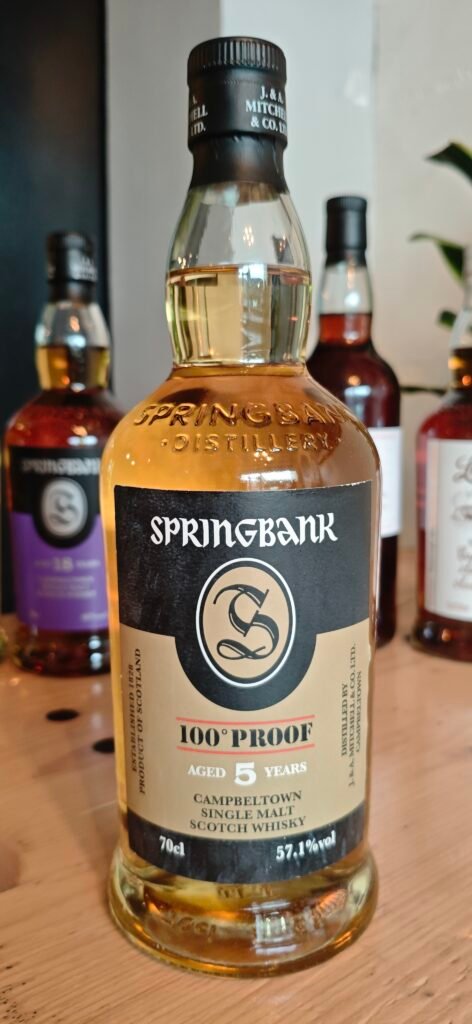
Springbank 5yo 100 Proof – 2025
Single Malt Scotch Whisky – 57.1%
This second of three Springbanks is a new addition to the range. A younger release than has been seen for a while from the distillery, but partly motivated by the two facts that (1) people want more Springbank whisky, and (2) the distillery increased its efficiency about 6 years ago so it was actually producing more spirit, and they didn’t want people to wait.
Bottled at a touch below cask strength, at the old British 100 proof level (a holdover from days when alcohol strength was tested with gunpowder), it comes from bourbon wood exclusively. With it’s reduced age, increased strength, and light cask touch, it offers an intriguing perspective on Springbank style.
Notes: 👃🏻Lemon, tequila, light brown sugar, new shoes, praline 👄Hot toddy, grassy, little pâté, peppery (even with water), milk bottle sweets.
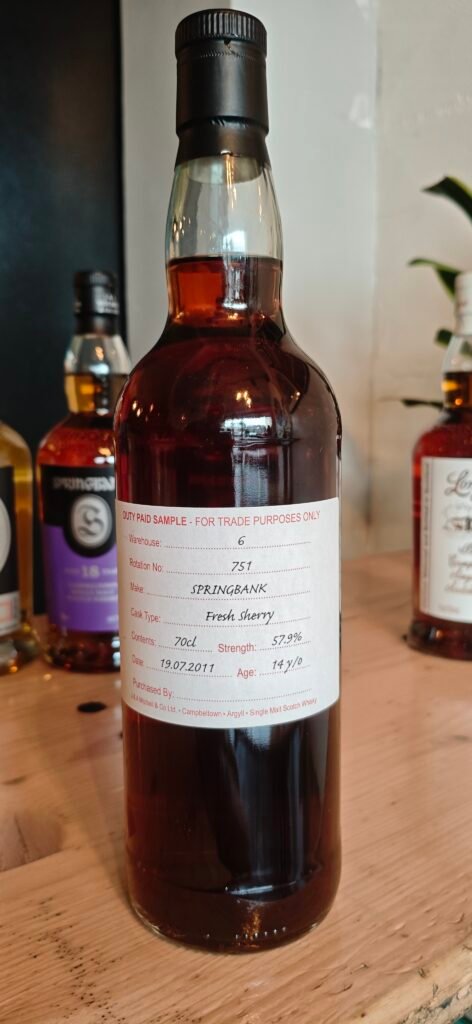
Springbank 14yo Cage Bottle – 2025
Single Malt Scotch Whisky – 57.9%
Springbank distillery cage bottles are sold at the distillery, bottled from a single cask, and could be anything. The idea began back in 2011, when a small number of bottles would be filled and taken to the Cadenheads shop (the 3rd brand under the J. & A. Mitchell Co. umbrella) in Campbeltown, where they’d be kept in a back room, in a cupboard with a chickenwire mesh facade – so it looked like a cage. Those in the know could go to the shop and ask to see the cage and point out a bottle they’d like. Limited, secretive.
As the Springbank name began to carry more and more weight, and the word got out that you could get something truly special at Cadenheads, then the bottles began to disappear faster than the distillery could resupply them. So now, the cage sits at the distillery, out in the open. Some of the mystery has been lost, but the whisky remains just as special.
The bottle Andrew presented for us sat for 14 years in a fresh sherry cask (hence the colour). Two of this very same bottle were selected by Andrew to take to his wedding this summer, to ease people into the speeches. I think this will be another memorable thing for his guests in an already very memorable day.
Notes: 👃🏻Big red + green sherry notes, touch of menthol, plaster (building), fried egg sweets 👄Cherry, aniseed, cola, charred oak, a little balloon, bloody mary, jalapeno, brandy or Jägermeister.
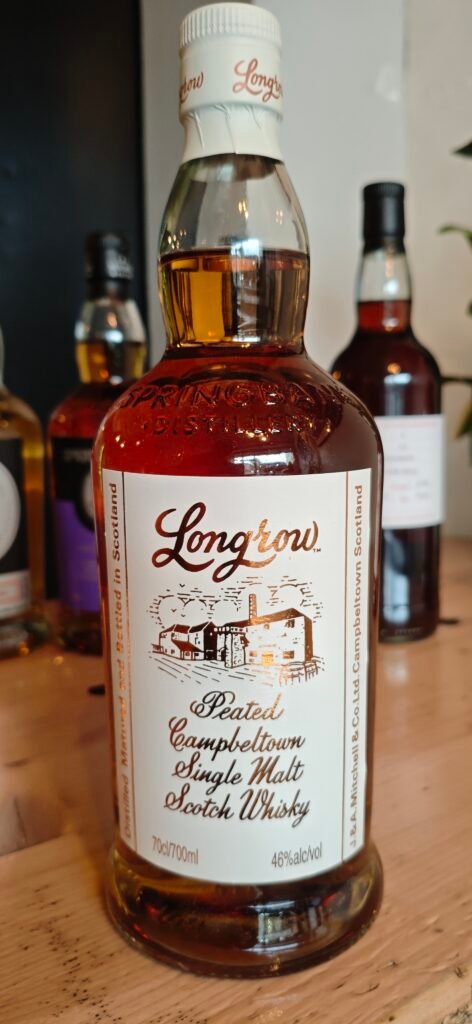
Longrow Peated – 2025
Single Malt Scotch Whisky – 46%
Onto the third type of whisky made at Springbank distillery: Longrow. In an apparent act of caving to consumer feedback, it will no longer be labelled as Heavily Peated even though, by comparison, it is the highest level of peated whisky they make. This style is also distinct for being straightforwardly double distilled. It was created in the 70s when the distillery were looking for a blending component that was similar to Ardbeg and other Islay whiskies. Though, considering they use mainland Aberdeenshire peat as opposed to the coastal, island peat burnt on Islay, the whisky certainly stands out in its own right.
This is a NAS (non-age statement) made up of whiskies between 5 and 8 years old, aged in a mix of bourbon and sherry casks. Part of the reason for the lack of age statement on this core bottle is that it hasn’t been made consistently over the years, so having recognisable branding, but not restricting themselves to a certain contents, works well.
Notes: 👃🏻Agave, pastry, rubber, almost tyre fire, veg gravy 👄No fire, earthy, smoke background, oily, mossy, meat pie, salt, savoury wood, little caramel.
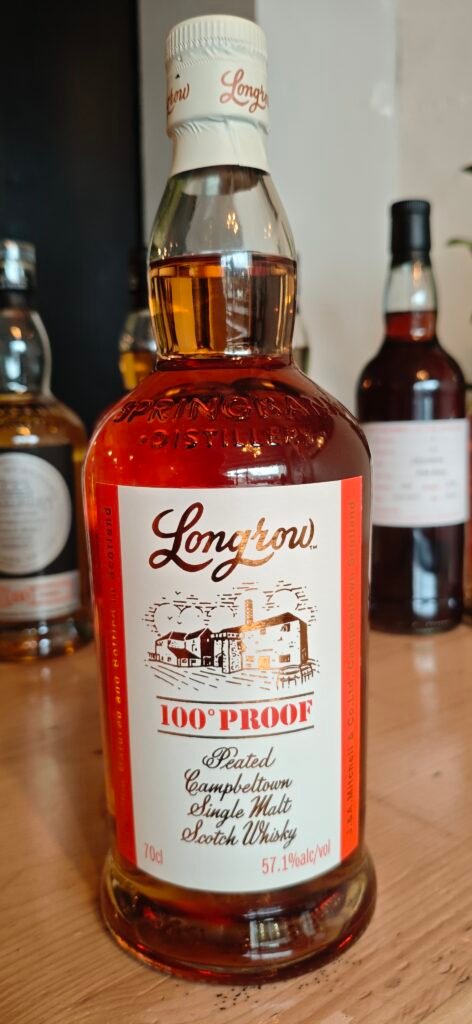
Longrow 100 Proof Batch 2 – 2026
Single Malt Scotch Whisky – 57.1%
Finishing with another relative newcomer, this punchy dram was aged in bourbon barrels and red wine casks; Andrew informed us that include some fresh Spanish Rioja casks. This is batch 2 of the Longrow 100 Proof labelling, which replaces the Longrow Red series of wine cask finishes. Moving away from explicitly branded red wine types affords the similar flexibility that dropping the age statement does. While each batch will likely still have some fun red wine influence, the distillery isn’t bound to anything specific.
For a distillery as in demand, as hardworking (each floor of barley malted to Longrow peat levels requires 100 extra wheelbarrow trips to the kiln!), and just as bloody good as Springbank, I think, unlike the SWA seemed to, we should trust that they’ve got this.
Notes: 👃🏻Fire, spaghetti hoop tomato sauce, berry-topped pork pie, bit of bile, meat smoke 👄Sweet bolognaise, chutney + dark chocolate, salty savoury rum.
The Winners
Vote Winner: Bottle #2 – Springbank 18
Close Contender: #4 – Springbank Cage Bottle
I’ll say it again, Springbank are a big deal, and I am so very happy that Cambridge Whisky Club, at just over one year old, could host them, and Andrew. So possible the first winners are all of us that were lucky enough to be in the room for this event. Perhaps it shouldn’t come as much of a surprise that the expertly crafted and rounded Springbank 18yo won the vote – it wasn’t even close! At around £120 a bottle, and one that is released sparingly and devoured from shelves, it helps to show that Springbank have earned its cult status.
Andrew’s wedding speech cage bottling selection was the runner-up, coming in with half the votes of the 18yo. A different twist on the Springbank character, and real treat to be able to sample a single cask, cage bottle without making the arduous journey to Campbeltown.