An exploration of our favourite spirit from Scotland
When: 22nd January 2026
Where: Thirsty
Host: Elliott Drinks Whisky
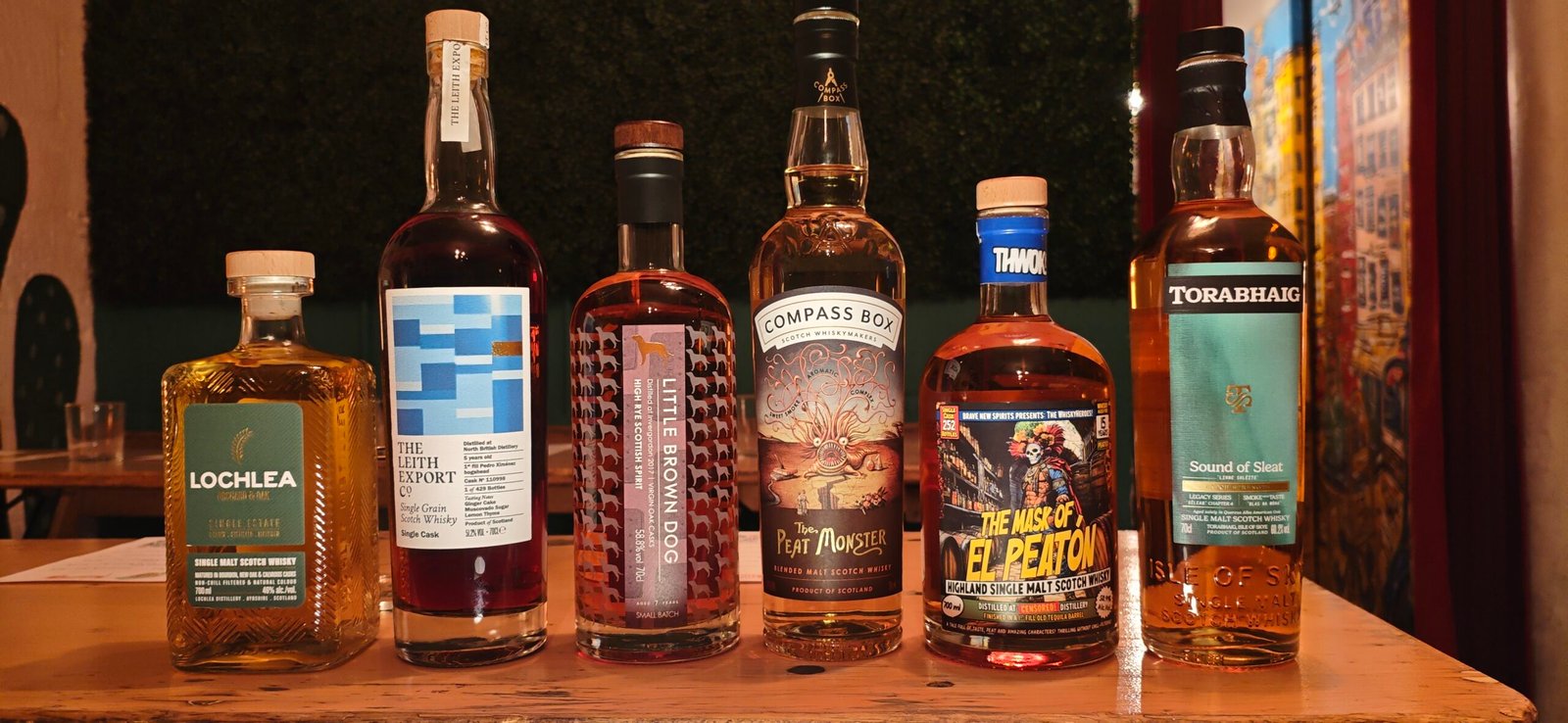
Burns Night is the big one on the whisky calendar – a Scottish event more widely recognised than St Andrew’s Day. Ostensibly a celebration of Robert Burns’ life, in partaking, many immerse themselves more broadly into Scottish culture. There was no Burns supper for us (though we did have crackers), instead we focused on sampling a diverse range of whiskies. This year, I’d forgone any more structured theming beyond “Scotch Whisky”, having presented plenty of this sort of event in the past where I gave a tour through the regions. As I’ve become more and more fluent in what whisky is out there, and knowing that you can pretty much get any style from any region, I feel as though I’ve moved past that sort of framing. I don’t dispute the statistical prevalence of certain styles marketed in certain regions, but I do think that it can lead to reductive appreciation of what’s actually possible – and I’m all about maximising exposure to what’s possible. And there are certainly enough talking points around the industry, production, rules, styles and approaches to and within Scotch whisky that you don’t need the region-framing to have a great and engaging tasting!
The Whisky
(Click on the images to buy a bottle)
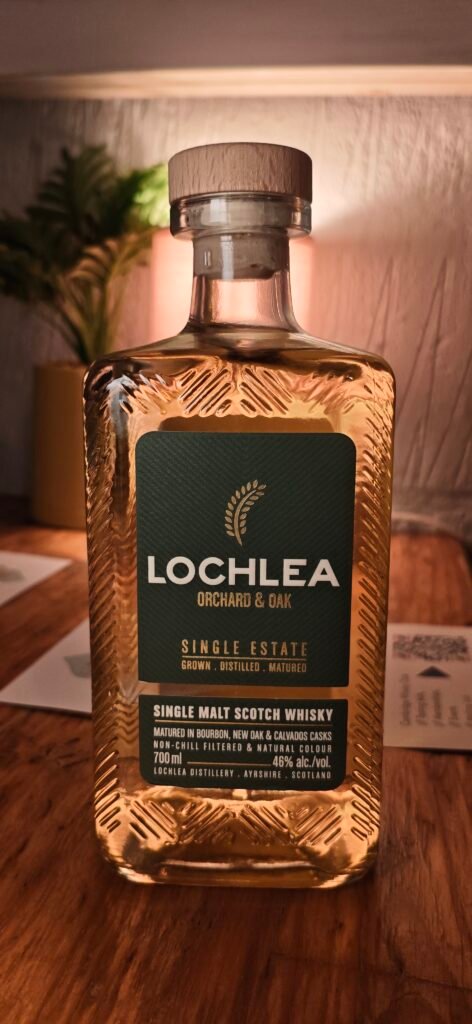
Lochlea – Orchard & Oak
Single Malt Scotch Whisky – 46%
Launching their inaugural whisky on Burns Night 2022, Lochea burst onto the scene without a massive build-up, but has consistently delivered solid, enjoyable drams. Based on a farm that was formerly owned by the Burns family and home to Robert Burns himself for 7 years, they provide a great way to open a Burns Night tasting!
Summer 2022 saw them release their first core bottling, Our Barley, and over the next 3 years (amongst a handful of limited editions) they brought us their seasonal releases: 4 bottlings each year, of starkly different styles aligned with the phases of the farming calendar. At the end of 2025, 3 core bottlings emerged as the ultimate culmination (and replacement) of those seasonal bottlings.
This, our opening whisky, is one of those new core bottles, evolving out of the Sowing and Harvest releases. It really highlights the intrinsic fruity, farmy character of Lochlea spirit with a maturation across 1st-fill bourbon, brand new American and calvados casks.
Notes: 👃🏻Apples, candyfloss, lime cordial, sawdust 👄Oak spice, spiced crumble, earthy leather/salad, vanilla, cask char, coconut.

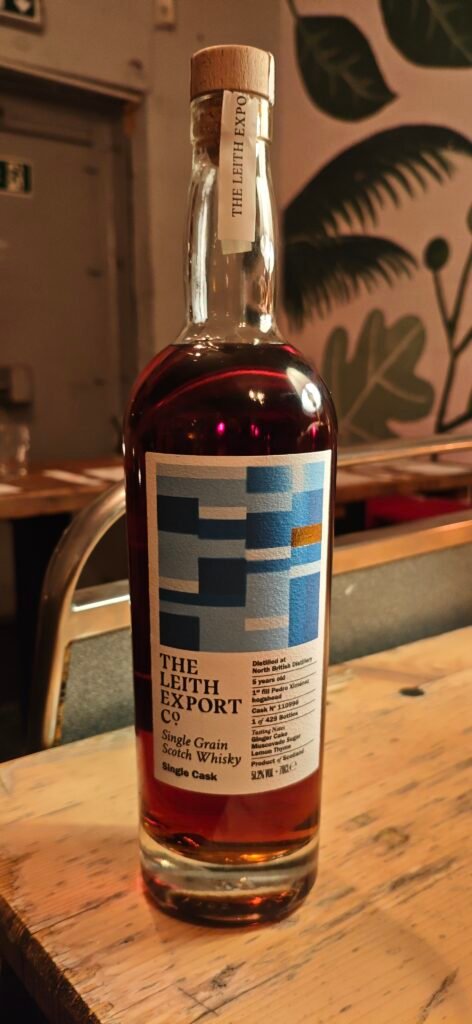
Leith Export Co. – North British 5 yo
Single Cask, Single Grain Scotch Whisky – 51.2%
While Port of Leith awaits the maturation of its whisky, the company behind them are getting stuck in with blending and bottling of whiskies sourced from elsewhere. Their Table Whisky is one such example from their portfolio – a single grain offering from North British distillery that is dangerously drinkable: introducing people to NAS grain whisky at an affordable price. I use that as my point of reference because our second bottle of the night was another of their North British single grain releases and similarly unusual.
Traditionalists would have you believe that grain whisky has to be aged till greatly expensive to be enjoyable (stay tuned for my second Burns Night event to see that challenged in a different way), or only belongs in blends as a cheap-to-make base. So the low ABV, NAS table whisky concept is a great push back against that unnecessary and exclusionary brand of elitist snobbery, as is this bottle, just in a different way.
This single cask expression is young, with a visible age statement. It is presented after a 5 year stay in a first-fill PX cask, and by the look of the liquid in this bottle, it was a pretty fresh cask. So the experiment and the statement here is: drink this young grain whisky which is raw and unmarried from one cask, let alone blended. I accepted when I gave it to my guests that it was a risk, but a calculated one, and a rare chance to try something truly different at a Scotch whisky tasting!
Notes: 👃🏻Ginger beer, almonds, cola bottle sweets, spiced rum 👄Alcohol, candied citrus, honey, brown sugar, red berries, toffee popcorn.
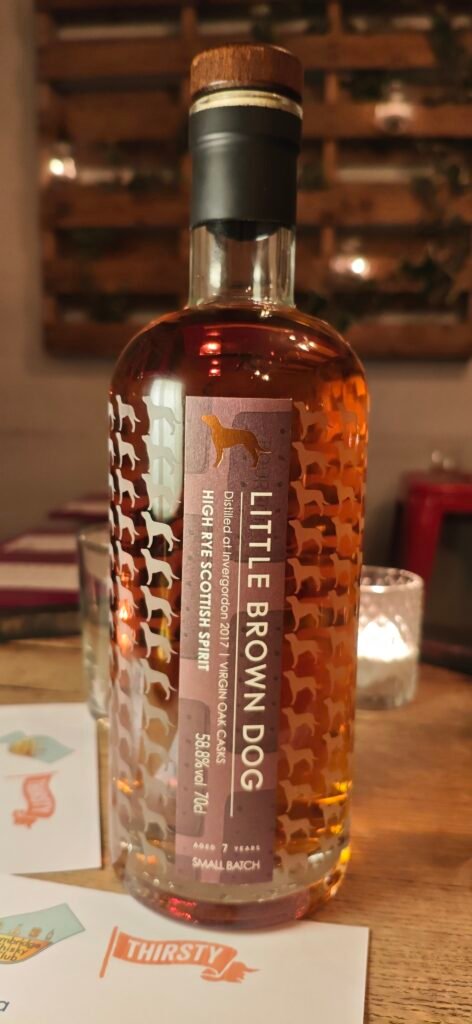
Little Brown Dog – Invergordon 2017 7 yo
Scottish Spirit- 58.8%
If you’re reading this event review in order, yes, I did just say it’s rare to sample something truly experimental at a Scotch whisky tasting. Well, I managed to find a second incredibly interesting and positively polarizing bottle of Scotch whisky industry output. Note the linguistic gymnastics to not call this a Scotch whisky?
Opened in 1959, Invergordon is a fairly new grain distillery, and the most northern in Scotland. Owned by Whyte & Mackay (currently under the umbrella of a Filipino conglomerate), it mostly fills blends and goes to indie bottlers, though they do advertise some own-bottlings on their website, even if I’ve never seen them available anywhere in the UK. Their mashbill is typically made up of corn, un/malted barley and local Scottish wheat.
For the worldly amongst you, that might sound like a familiar recipe list, and the distillery clearly thought so too. Inviting a bourbon-maker over from the Atlantic in 2017, they wanted him to make them a high-rye Scottish bourbon-style whisky (mixing their mashbill up by introducing Rye and ensuring at least 50% corn). Given the metaphorical keys to the building, he was told to do everything as though he were at home. Unfortunately, that included him pitching the yeast with special enzymes that enhanced the efficiency of the alcohol production – an addition that is not allowed under the Scotch Whisky Association legal definition of Scotch whisky.
The misstep (rather than mistake) and it’s implications, as I understand it, were potentially not realised until bottling considerations were approaching. Rather than have to deal with it themselves, and via the services of a whisky cask broker, this wonderful Invergordon experiment has found it’s way to Little Brown Dog who were (I can only imagine) as excited to bottle it as I was to try it: a high rye, not-bourbon, not-scotch whisky
Notes: 👃🏻Wood spice, cherry, caramel, char, furniture polish 👄Dark chocolate, oaty, treacle, cherry liqueur chocolates, pancakes, apricot, some menthol afterburn.
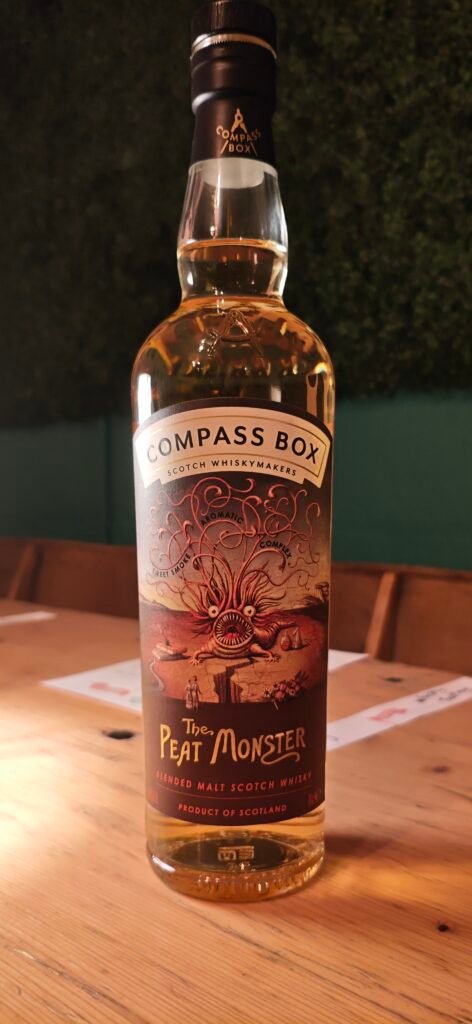
Compass Box – The Peat Monster
Blended Malt Scotch Whisky – 46%
Compass Box were, at one point, the bad boys of whisky, getting in trouble with the SWA on more than one occasion for their drive to innovate the whisky-making process and be transparent while doing it. Things have calmed down now, but they are still experimenting with interesting processes to protect against future issues and just differentiate themselves.
This bottle, however, is pretty straightforward and uncontroversial: a blend of (mostly) smokey Islay malts giving (mostly) smokey notes. To Compass Box’s credit, I probably did undersell their brand of SWA compliance: for each of their blends, there is a factsheet online giving some form of breakdown of the components – source, maturation, ratios, and a sneaky visual tree-ring diagram ‘hinting’ at ages. This bottle was 64% Caol Ila, 35% Laphroaig (both from multiple refill casks) and 1% proprietary French oak Highland malt blend – this leads to a pretty peaty experience but with a fairly pronounced sweet backbone.
Notes: 👃🏻Floral, sweet, tobacco, green beans, Chewits 👄Ash, meat & crackers, TCP, sweet, pâté.
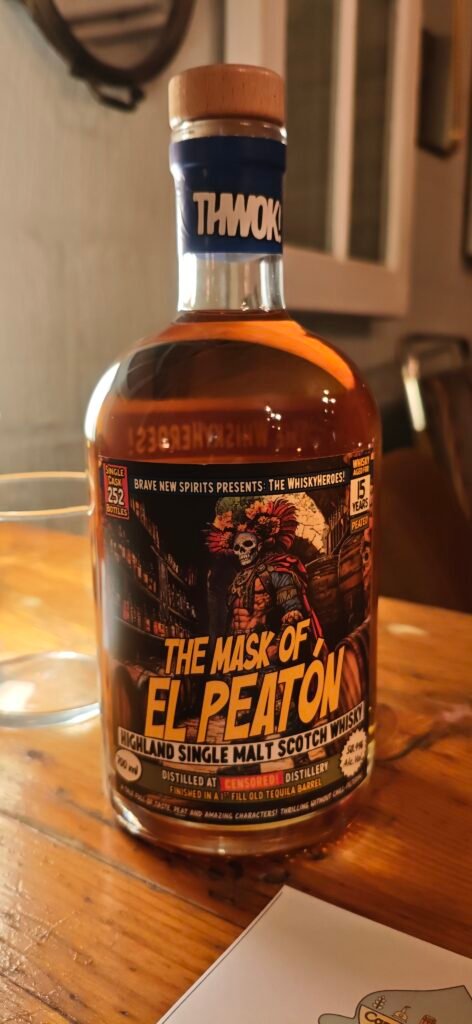
WhiskyHeroes – The Mask of El Peatón 15 yo
Single Malt Scotch Whisky – 50.9%
Branding in whisky is a funny thing. Lately, Highland Park has dropped its Viking motifs, but we’ve still got Smokehead giving those heavy metal vibes. The Whisky Exchange switched to a cleaner design, and Master of Malt launched a range of whiskies with hand-drawn dogs on. There’s a lot of variety out there is my point, and each marketing team thinks they’ve found the key to reaching the broadest crowd, or that untapped niche audience. Marketing is manipulative in its essence, from subliminal advertising to celebrity spokespersons, so you never really know if you have free will. Anyway, I think the comic-style branding of the WhiskyHeroes range from Brave New Spirits is pretty cool 😅.
This particular expression is a single cask of 15 year old Highland whisky from an unnamed distillery. The twist: it is a finishing cask that had just spent 8 years maturing a tequila. Agave spirit aged whisky is a relatively new thing, following the rule changes of June 2019 (which also allowed the calvados casks Lochlea used for our first bottle of the night). This bottle won the Master award at the Scotch Whisky Masters last year in the Highlands & Islands Single Cask category – so a good sign that tequila and mezcal finishes are resonating with drinkers.
Notes: 👃🏻Bile, banana (caramelised), kiwi, gym bag, Revels, tyres & grease 👄 Agave, pepper, brown bread, toffee, herbal oil, duck à l’orange.
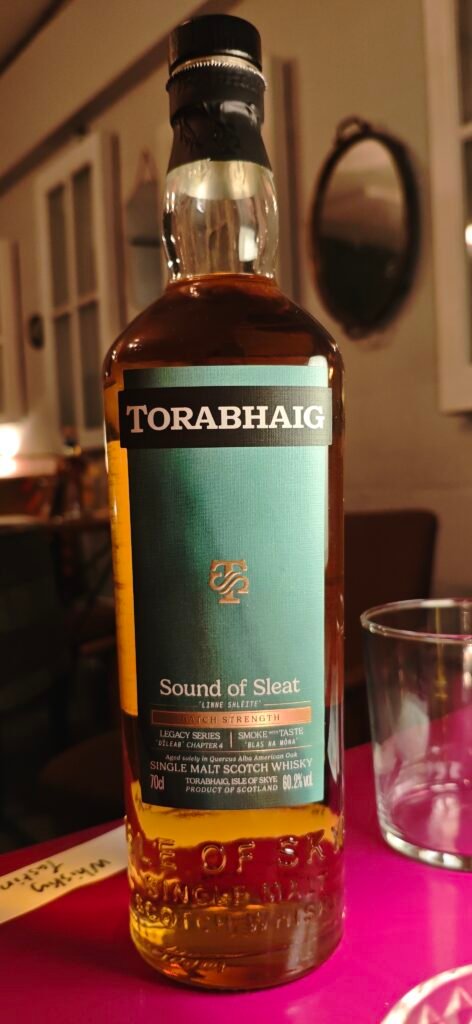
Torabhaig – Sound of Sleat Batch Strength
Single Malt Scotch Whisky – 60.2%
Back in June last year, at our Father’s Day tasting, the original Sound of Sleat expression went down well, and the remainder seemed to fly off the bar too. So, when I found out about the batch strength version, it seemed only proper that it get a feature in a future tasting. That does mean, though, that I have written about Torabhaig and almost this exact bottle before.
Something I didn’t mention when going into the details of that bottle (which still apply here, with only the ABV changing) was the welcome transparency in their descriptions of the bottle. Explaining the mix of (admittedly common) barley varieties they’ve used and the peat levels stood out. The new crop of younger distilleries do often seem to be willing to open up about what they’re giving us, which is certainly one satisfying way to build trust with their audience.
In this case, the peating levels were of particular interest to me: they give the phenol parts per million (ppm) measure after smoking the barley, and residual in the bottle. When a producer is marketing a whisky and wants to appeal to the peat-heads, they can tout the ppm levels to try to communicate just how smokey it’s going to be. The problem with that is, unlike age statements on bottles, there’s no regulation about when that measurement has to be taken; so, measure it during smoking, and slap that large number on your website… only, there’s a lot of process between smoking and bottling, and the ppm levels have a tendency to drop at each stage. It’s definitely a bit misleading, or at the very least unreliable, to trust in those lone, quoted numbers – Torabhaig giving us the bottle residual levels is true transparency, and it’s wonderful.
Notes: 👃🏻Butterscotch, effervescent, grapes, frankfurters 👄 Tar & bitumen, tropical toffee, BBQ crisps, beechwood smoke, ginger/bergamot.
The Winners
Vote Winner: Bottle #6 – Torabhaig
Close Contender: Bottles #2 North British 5 yo
The original Sound of Sleat didn’t win Torabhaig the vote at my Father’s Day tasting, despite being well-liked, but the batch strength version definitely stormed in here. I personally can’t remember how I felt back in June 2025, and I can’t see too much overt similarity between my tasting notes for the original and for this expression, but the broad strokes are there, and it is a damn fine smokey whisky, without any bombastic cask bells and whistles. Speaking of, I’m extremely happy that the PX-doused young North British was received well enough to make it to 2nd place in the vote. It’s a wonderful experiment in taking a chance from Leith Export Co., and I think it was well worth the try – I’m a sucker for natural colour like that in a whisky.
The buzz among the Americans in the audience around the Invergordon not-bourbon was that, well, it wasn’t bourbon. It’s hard to know quite what would have made it differ in the ways it does from its transatlantic cousin; possibly the maturation environment and climate, or the water – both were suggested in the room. And whilst we’re thinking about comparisons, I feel the WhiskyHeroes expression, with its more delicate mainland peat, may have unfairly suffered judgment following on from the Peat Monster. Relative placement of whiskies like those is hard to judge without tasting them, and with a sold-out event and limited time, that isn’t always possible. Placing it before the Compass Box blend could have resulted in that feeling weak and washed out, due to the drop in ABV, so there’s not a guaranteed best way to arrange these things sometimes; that’s just the nature of tasting lineups. And, by no means did the unnamed Highland come across as bad, just I think there is a chance that it would shine a touch brighter without 99% Caol Ila + Laphroaig still ringing in our noses and mouths. Luckily, there’s some left to try on the bar in Thirsty another time.