A world of whisky awaits – surely that’s the path to world peace
When: 7th November 2025
Where: The Yard, Ely
Host: Elliott Drinks Whisky
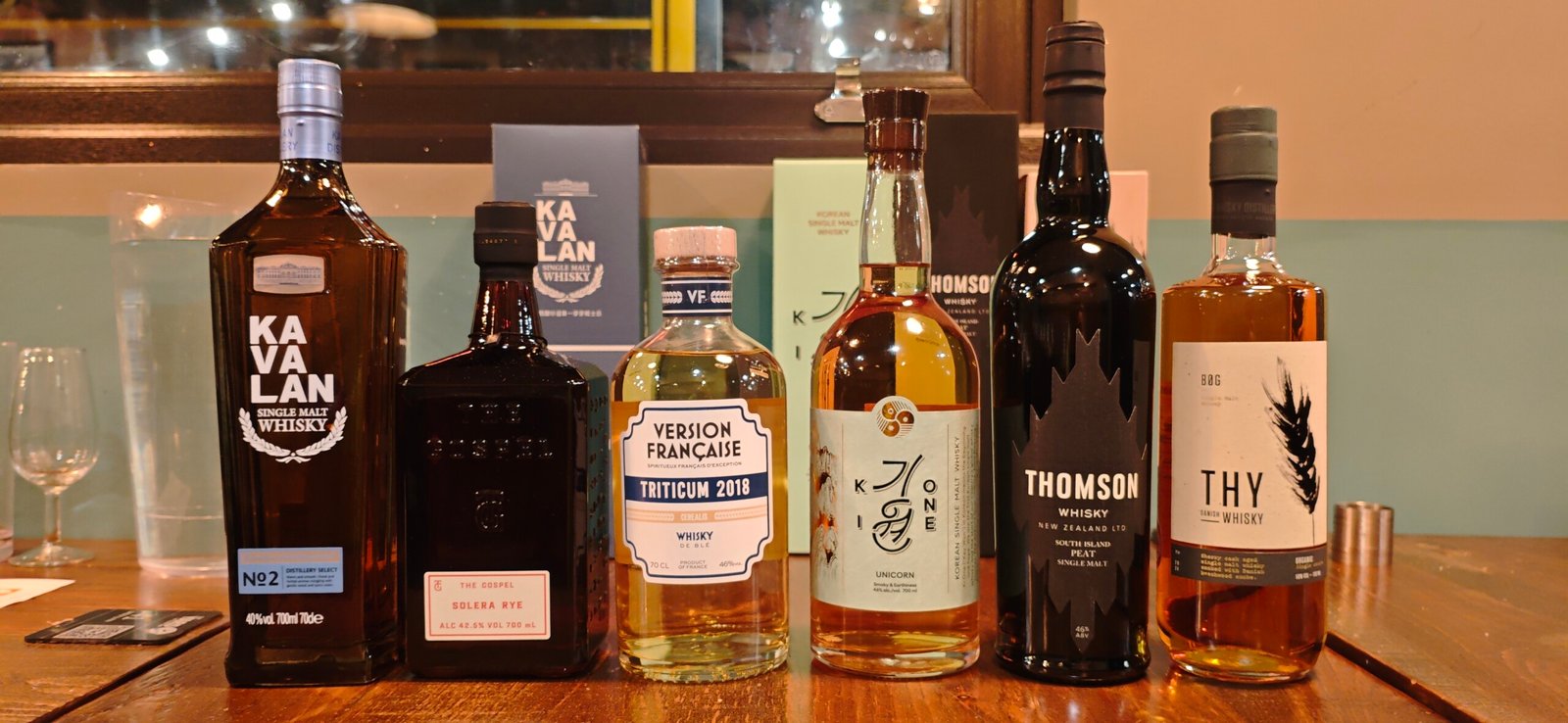
Another trip to Ely, another great crowd. As I wrote on the ticket page for this event, it feels like my visits to The Yard have had me following a fairly sensible trajectory of tasting themes. Prior to this, we’ve covered 2 big swathes of the whisky-producing world and a broad introduction to the concept of whisky, so touching on some of the lesser-known or newer whisky nations seemed like a good next step.
What do I mean by international whisky? Well, as a UK-based whisky presenter, to me it definitely means no Scottish whisky, but I also like to avoid the other more prolific countries too – so no Irish, American, Japanese. Previously, I have included English and Welsh bottles, but not this time. So we’re going further afield, looking at parts of the world offering something different to what Scotch whisky offers. That might be through different grains, different rules to work within, different access to casks, and different climates to contend with.
The Whisky
(Click on the images to buy a bottle)
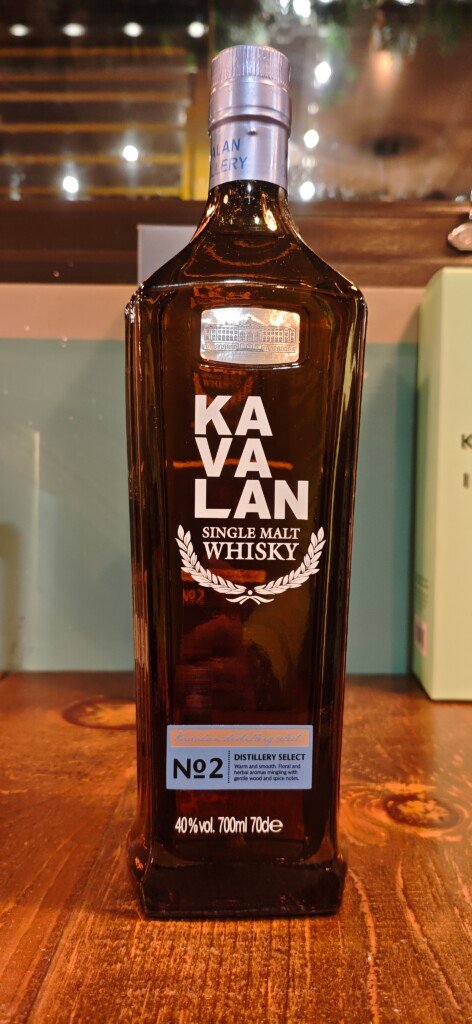
Kavalan – Distillery Select No. 2
Taiwanese Single Malt Whisky – 40%
Justification: Tropical opener
Taiwain is the 4 largest consumer of Scotch whisky, by value, in the world. That can be interpretted as meaning, for such a small island, that they like the fancy stuff. In fact, I read one person describe attitudes as considering 12 and 18 year old scotch whiskies as standard and entry level. Each to their own!
So, what does that mean for Taiwan’s own producers? Well, they strive for premium branding and bottles, but they don’t need to wait all those years to provide it. The extreme heat and humidity (with days most of the year passing 30°C) lead to much more open pores in the cask, so a greater surface area for maturation – the chemistry happens quicker. Although the downside is that the angel’s share is more like 12% compared to Scotland’s 2%.
Kavalan has been around since 2005, and was the first distillery to open on the island after the government relaxed the state alcohol monopoly. In 2015, they won World Whiskies Awards’ Best Single Malt trophy and (although they’re mostly competing with themselves) this bottle has won best Taiwanese whisky for the last 2 years. Using imported European barley, the aim with this expression is to marry casks from the warehouse to build upon their characteristic tropical style with more floral notes.
Notes: 👃🏻 Lightly perfumed, sawdust, banana, orange 👄 Tropical fruit, yellow stone fruit, salty, ginger, lavender.

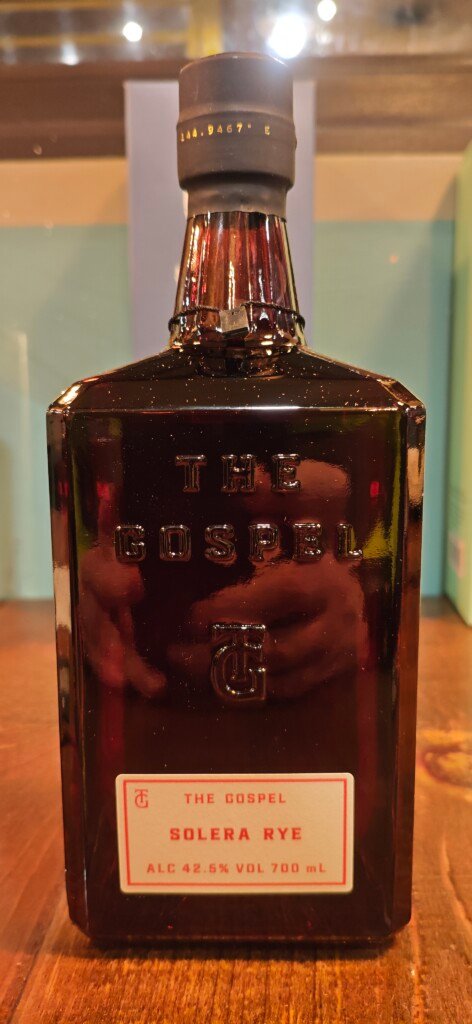
The Gospel – Solera Rye
Australian Rye Whisky – 43.5%
Justification: Unusual rye style
I usually check out reviews of a bottle and sometimes its siblings when I’m confirming my line-up. I don’t necessarily listen to them, but I read them. Knowing that each palate is different means I try to think more broadly than the voices from a small handful of write-ups. However, I did want to note for this bottle, that the vibe I picked up online here was somewhat negative – though the notes cited sounded delightful, the feelings were that this rye just wasn’t like the rye’s they were used to (if they were even used to rye at all). All I could think was: perfect! And spoiler alert, this went down very well.
Melbourne-based The Gospel do describe what could be seen as a warning to some, in that they aren’t after making an American-style rye, and that the farm & region they source their rye grain from has somewhat unusual flavour characteristics. Again: perfect! With the booming craft whisky scene in Australia at the moment, I really would love to do a dedicated tasting some time, especially when they’re doing things like this.
This variant from The Gospel uses a solera system, more common in sherry, made up of 5 stacked layers of new & refill American oak, plus local red wine barrels. The idea is fill from the top, and each time you bottle some liquid from the bottom, you cascade down, layer by layer. This way, the output is more consistent and the effects of differences between batches are softened.
Notes: 👃🏻 Ginger beer, treacle, bready, alcohol, cream soda 👄 Red fruit, aniseed, rye cracker, popcorn, paint, maple, vanilla, green grain.
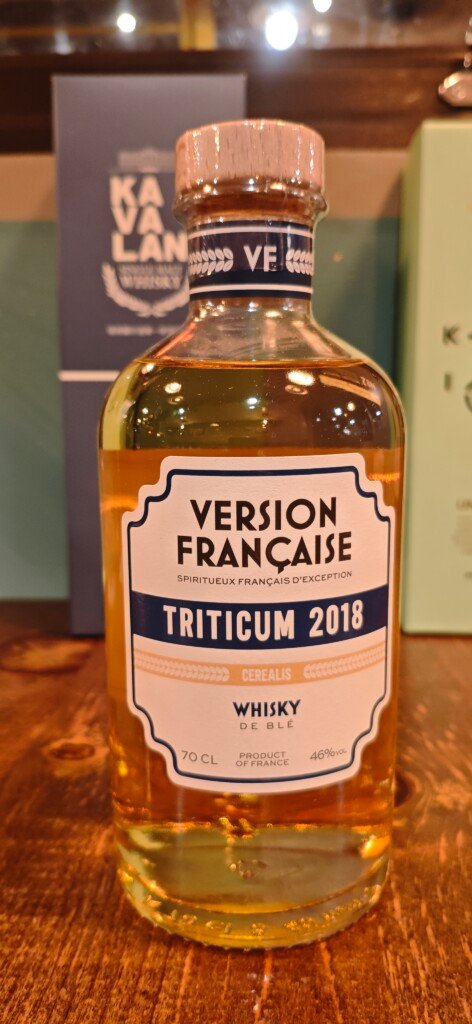
Version Française – Triticum 2018
French Wheat Whisky – 46%
Justification: Wheat from closer to home
It is this writers belief that one good sign of a healthy whisky industry in a country is the presence of independent bottlers. I’ve tried the ouptut from a couple from France now, which makes sense considering they have nearly as many distilleries as Scotland and the oldest of which is over 40 years old. There’s what amounts to history and legacy now, despite still being a new world whisky producer, partially due to centuries of shared experience across wine and cognac. Plus, France is 2nd largest consumer of Scotch whisky in both value and volume, so there’s appetite.
The Version Française range comes from the well experienced retailer/wholesailer/distributer, La Maison du Whisky. Having been blending and bottling French whisky for decades, they know what its about. Though, this range (currently at 49 releases) marks the first exclusively French-dedicated lineup. This bottle originates from the Jura region (not that one) to the east of the country, and is 100% malted wheat. It’s a 2018 vintage, and reportedly bottled in 2023, meaning 4 or 5 year old whisky. The general attitude around the room was that it needed a little more time. I felt that more time in the glass was certainly helpful to open up some of those more tropical notes.
Notes: 👃🏻 Alcohol, popcorn, cheerios 👄 Pepper, spice, lots of pink grapefruit, red boiled sweets, toffee, melon, banana, white wine.
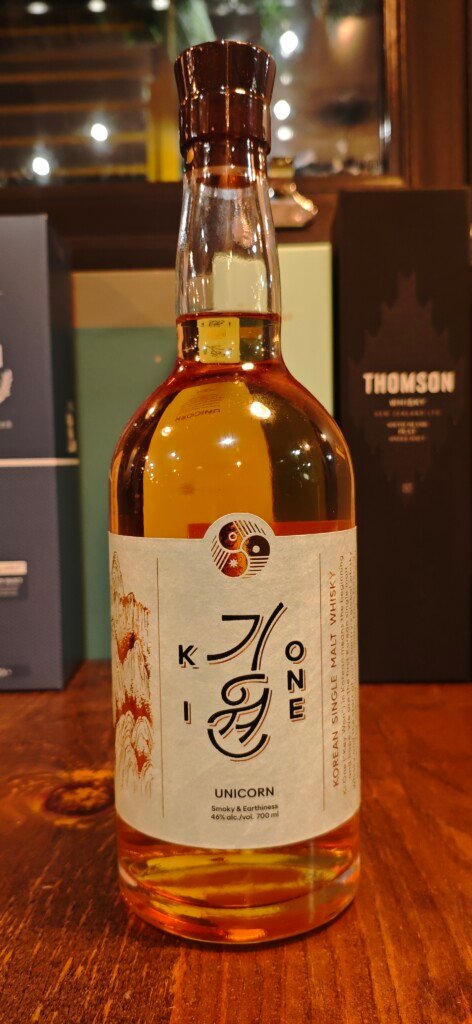
Ki One – Unicorn
Korean Single Malt Whisky – 46%
Justification: Scottish peat, Korean climate
You might argue that Taiwan and Korea are too close together to both be featured in one international whisky tasting, but to that I say a few things. One, you try sourcing from all the whisky-producing countries using one website, and two, there’s a New Zealand whisky here too (although that is further from Australia than this is from Taiwan). But, seriously now and most importantly, the climate changes a lot between these distilleries, both in terms of meteorology and market – two important factors that affect production.
Ki One (formerly Three Societies) is Korea’s first single malt distillery, founded in 2018, nestled in the shadow of an imposing mountain (pictured in glorious foil, just out of shot, around the bottle here). And that’s not just metaphor, between November and March the distillery gets no sun. That results in a summer to winter temperature swing of 30°C to -20°C. Where the Taiwanese heat opened up more surface area, we now have that coupled with a push and pull effect, mixing the whisky and wood as the temperature oscillates. The folks at Ki One estimate that 18 months in their warehouses is equivalent to 8 years in Scotland!
The core range of expressions features 3 entries, each reflecting 1 of the societies from their original name. Tiger represents Korea with a sherry maturation, Eagle represents USA with a bourbon maturation, and Unicorn represents Scotland with a peated malt. Unicorn won the IWSC Worldwide Whisky trophy this year. It is a non-age statement release, but the distillery adheres to the unwritten international rule of 3 years does a whisky make. I couldn’t find the source of the peat online, but despite their aim to not overpower the drinker with coarse smoke, I do think, from the notes, that it could be Islay peat.
Notes: 👃🏻 Sulphur, burnt rosemary, parsnips, some aniseed, smokey honey 👄 Dirty citrus smoke, caramel, salty, mackerel, bitter oak.
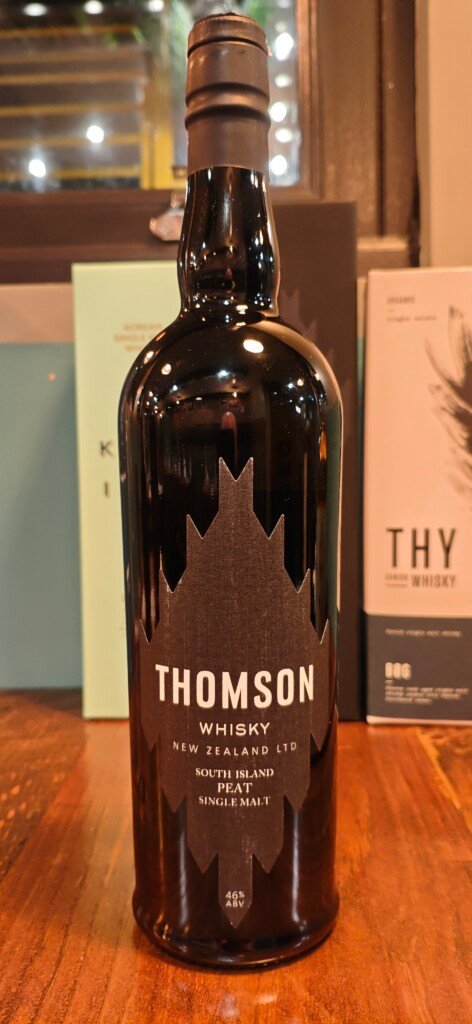
Thomson – South Island Peat
New Zealand Single Malt Whisky – 46%
Justification: Peat from a different source
Pouring this bottle around the room I was immediately hit with my first three nosing notes below. It was visceral and specific as it evaporated from the measure and my fingers. From my own glass it was softer, but before even the end of it I wrote a “wow” in brackets on my notes; that’s not the sort of thing I do too often, despite repeatedly telling people I like pretty much everything I try. Now, this didn’t earn my favourite vote as it isn’t my favourite style of whisky, but it does do this style so very well.
I’ve presented Thomson and their whiskies before, normally involving manuka wood-smoke. They fit well in international or overview line-ups due to their experimental energy and because it’s really interesting to offer different kinds of smoke. While this whisky is peat smoked malt it is quite special as that peat comes from New Zealand itself! There really aren’t many countries putting their own peat in their whiskies, rather than importing it of the malt from Scotland.
Different peats can impart wildy different characteristics on whisky – take Islay versus mainland Scotland: seaweed and iodine versus heather and honey. I do believe that a lot of people who don’t like smokey whisky have likely only been exposed to Islay whiskies – I’m getting side-tracked though. This whisky is 100% New Zealand barley, malted with peat from the south island, and matured exclusively in ex-bourbon barrels. Fantastic.
Notes: 👃🏻 Olives, brine, marmite, ant powder, fizzy smoke, citrus, agave 👄 Menthol, fishy, floral/fragrant, honey.
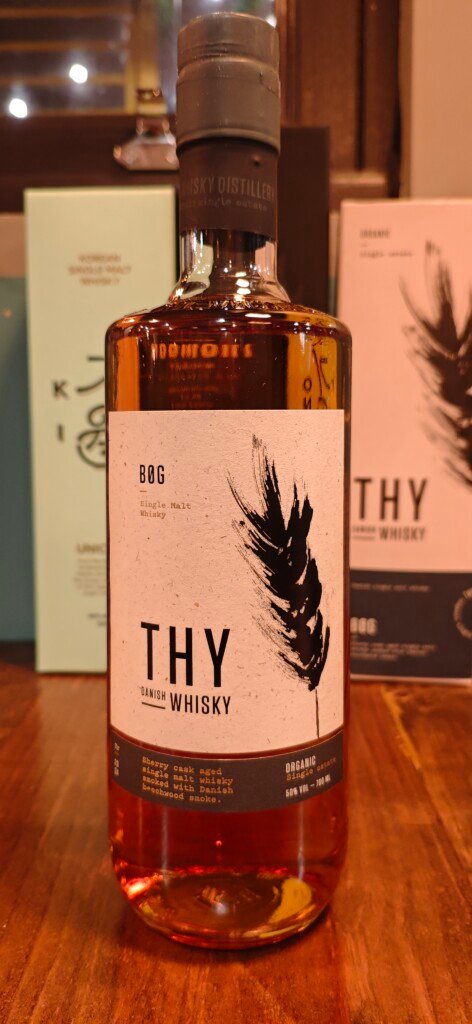
Thy – Bøg
Danish Single Malt Whisky – 50%
Justification: Different smoke source
The funnest fun fact I had to share on the night was that the 500 hectares of farmland in which Thy distillery sits is about the same size as Ely itself! Owned by the same family since 1773, it grows many different organic grains. The distillery was the brainchild of a member of the 7th generation, who began experimenting in 2010. By 2019 the 8th generation had taken over and it was 100% single estate; the following year one of their bottles (a precursor to this release) earned European Whisky of the Year in Jim Murray’s whisky bible.
Thy are one of the 10 founding members of the Danish Whisky Manifesto, which seeks to lay down the key values and core principles that the members agree to adhere to for the betterment and ongoing legacy of Danish whisky. They were also vocal critics when the forgotten EU agreement with Canada was dusted off, which was found to prohibit European distilleries from selling whiskies labelled as Rye Whisky.
Last year Thy released whisky #24 in their decade long inaugural series of bottlings and announced they’d move to core, single cask and limited edition bottlings. Bøg is one such core release, and it’s name means beech in Danish. It is a name which makes sense when you learn that the barley was malted with beechwood smoke – finally we have our international whisky in the line-up with a non-peat smoke source.
Another NAS (as all the bottles were in this line-up), this time matured in a mix of Oloroso and PX sherry casks. The smoke is definitely present, but is wonderfully different and leads to a whisky that expresses itself quite unlike a lot of what you’ll be drinking if you don’t take the opportunity to look beyond our little island. Though I would like to point out that it reminded me of the Spirit of Birmingham’s inaugural release, Aon; while that doesn’t have any smoke about it, there was something about those chocolatey mixed grain notes I picked up here that put me back in touch with it.
Notes: 👃🏻 Woody/bbq, vaseline, milk chocolate 👄 Cherry, furniture polish, chocolate praline, mixed grain, apricot jam.
The Winners
Vote Winner: Bottle #2 – The Gospel Solera Rye
Close Contenders: Bottles #1 – Kavalan & #4 – Ki One
There wasn’t a voteless bottle in the line up (which actually came as a bit of shock), but, with half of the votes, the rye from The Gospel was a clear winner, and a clear vindication for my statement in choosing it despite the reviews I’d read. I was confident that one man’s uncharacteristic rye would be another’s cup of tea. I’m ready to try more from them now!
The runner-up duo of tropical bottles might point at a leaning towards those tropical notes by both smoke and smokeless fans in the room. I think it’s a shame the Thomson didn’t get more votes, but I’d expect to see that do well blind taste tested next to a similarly styled Islay whisky – it’d shock some Scots I imagine. I’m certainly going to be looking at where I can include it again; it’s a whisky that deserves to introduced to many.