A deep dive into something different
When: 20th July 2026
Where: Thirsty
Technically, I can thank my time in the Cambridge University whisky society for the seeds of this idea, I suppose. Seven or eight summers ago we held a mezcal tasting between academic years, when there were fewer students around anyway, so we took a wider swing at an interesting tasting. One of the committee at the time was passionate about spirits beyond whisky enough to have the confidence to put together and present a line-up. For me, it was revelatory! At that point I’d probably been drinking whisky in that kind of setting for maybe 5 years, so I’d had fairly good exposure to lots of different styles, even if my tasting muscles were only just coming in. But, those mezcals were something completely different, and I remember finding minerality and earthiness in very different ways than I’d found in whisky until that point. It was exciting and opened my eyes to mezcal, but also I think it twigged in me that there’s complexity and interesting flavours all over the place, if you know, or are shown, where to look.
Despite knowing I like mezcal and tequila, I’ve not spent much time exploring them in a glass, and far less time than that researching how to spot the good and great, or knowing what a varied and engaging line-up would look like. So another vital element for this tasting idea to succeed was finding an exemplary host, and that’s the second thing the uni society helped me with. I think from even my first year attending events there, they hosted Billy Abbott for a whisky tasting, bringing bottles he’d selected to intrigue and educate. He is a man who knows spirits and beer (amongst a great many other things), and I’ve had the good fortune to bump into him at various events around the country that he’s either hosting or attending, not to mention welcoming him back to host uni whisky events nearly every year for the last decade. He’s a wonderful host and human being, and I know that while he does spend plenty of time educating others through training and tastings, he has educated himself as well, so he was a perfect pick to lead this introductory tasting.
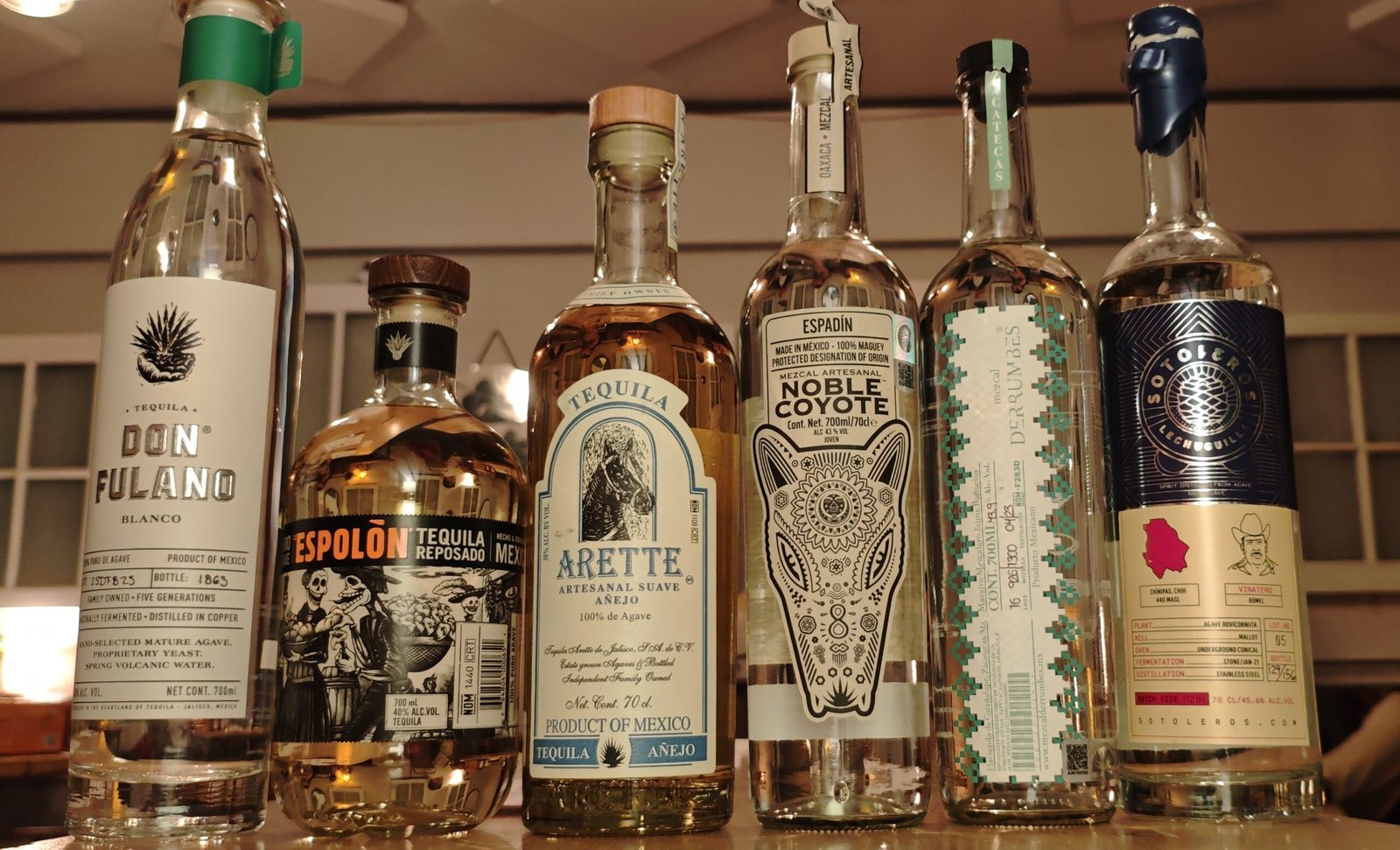
Now a brand ambassador for The Whisky Exchange, and given the brief by me that I wanted to educate people who might be brand new to the classification of agave spirits, he suggested a lineup of Mexican agave spirits from their shelves to shine a light on different angles to approach the broad category. As I’ve written before, you can argue that there’s even more diversity in agave spirits than there is in whisky – though due to differences in production and history, you do end up measuring against reasonably different axes, so it’s not clear there’s a definitive answer (and nor does there need to be). This review is a tad more scant than my usual writings as I’ve chosen not to try and research each bottle as I would for a whisky lineup (even one I wasn’t hosting myself). That isn’t a slight on the drinks (at all), or any comment on the event itself – I enjoyed the event and the drinks hugely, but the time it would take to do each bottle justice (in the way Billy capably did on the night) is too great when one is trying to plan and launch their first whisky festival <cough>. If whisky is your drink, like I did all those summers ago, you might open up a huge new world for yourself by trying something new like an agave spirit. If agave spirits are already your thing, perhaps there’s still something new here, whether it’s a particular bottle or a whole style to seek out.
The Whisky Agave Spirits
(Click on the images to buy a bottle)
Don Fulano – Blanco
Tequila – 40%
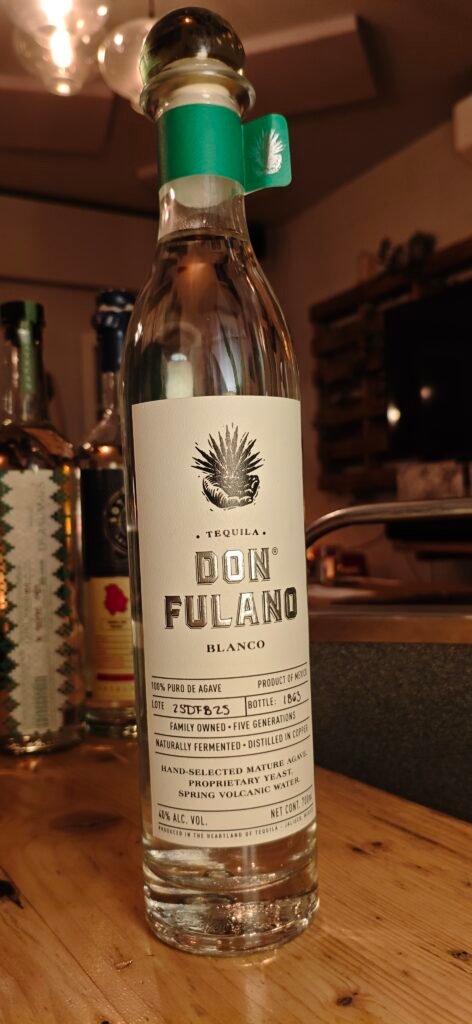
Billy had us open the tasting with a trio of tequila bottles. Tequila is likely the most common introduction for people into the world of agave spirits, but there were no plastic sombreros on display here. We started with this bottle of unaged tequila from Don Fulano, based in Tequila town itself; the Blanco name refers to that lack of aging.
The rules around tequila (and mezcal and other Mexican agave spirits) aren’t that different to those surrounding Scotch or Bourbon, for instance, and the production process isn’t too different conceptually, even if it looks unrecognisable at stages. Agave is a plant that comes in hundreds of varieties and can take anything from 5 to 30 years to mature into a harvestable crop (though a lot of agave varieties are grown wild, not farmed). All tequilas have to be made from Blue Weber Agave plants, and in a specific region of Mexico. And the industry that has grown around tequila production means that Blue Weber is an agave that is farmed, generally on a massive scale. Though there are still producers that aren’t massive industrial complexes.
Don Fulano was founded in 2002 by a Mexican uncle and nephew duo with whisky-geek roots (which is how Billy came to meet them). They have been experimenting with production processes in order to combine them in the search of making an ultimate, drinkable, delicious tequila.
Notes: 👃🏻Mineral, citrus, tyre, buttery pastry, salty, peach, green pepper, almond paste, overripe banana 👄Sugar + salt, kiwi jam doughnut, aniseed, chilli sauce, lemon biscuit.

Espolòn – Reposado
Tequila – 40%
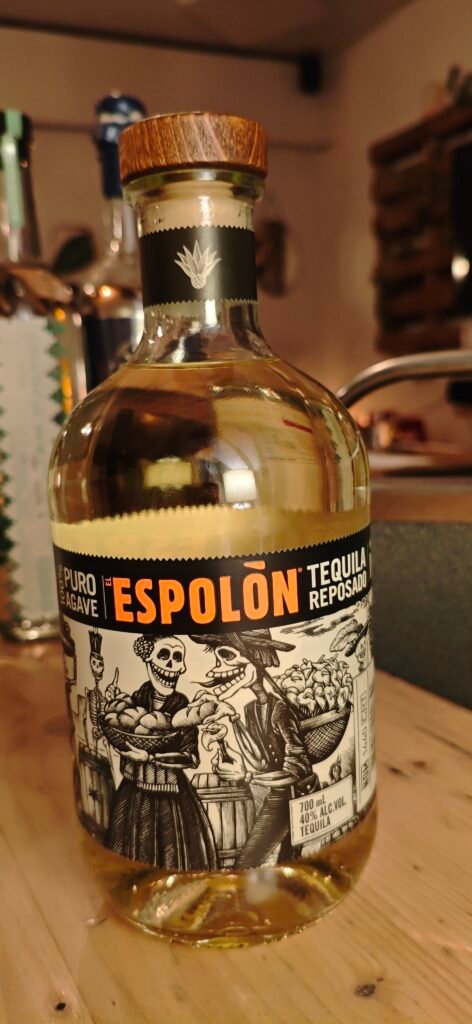
The aim of Billy’s opening tequila trio was to show the effects of aging. The second bottle is a reposado, which is Spanish for rested, and with tequila that can be for between 2 and 12 months in oak barrels. This Espolòn has rested for between 2 and 6 months in ex-bourbon barrels. The flavours that presented here immediately took the minerally/earthy edge off the blanco, and introduced more overt sweetness – the effect of that exchange with the wood.
Notes: 👃🏻Sweeter, pungent fruit/veg, candyfloss or pink sweets, ginger tea, grassy, sugar cookies + candied lime 👄Vanilla, salt, shortcrust pastry, toffee, tarmac.
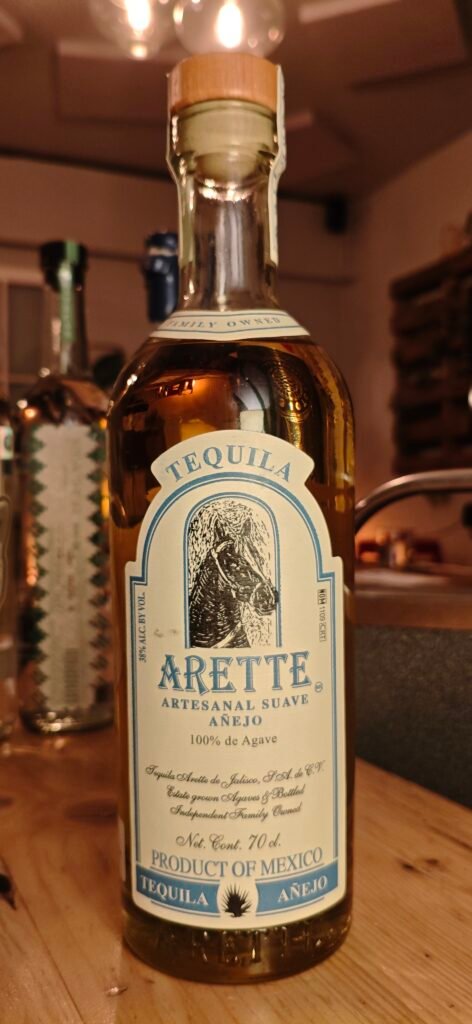
Arette – Artesanal Suave Añejo
Tequila – 38%
Our third and final tequila is an añejo, which means aged in Spanish. A tequila in this category has been rested in wood for 1 to 3 years. This comes from Arette, and is part of their Artesanal range, which sees them utilising more traditional methods of production for small batch releases. It spent between 18 and 24 months also in ex-bourbon barrels.
For me, this one was close enough to a whisky that I think you could absolutely trick people during a blind tasting. Out of the three tequilas, this seemed to fare worst in public opinion, though I do think that was partly because we had a room full of people who weren’t looking for whiskies. From my notes, I think I would describe it as a gateway tequila – so sensibly last in the story Billy was telling on the night, but possibly something I’d show someone earlier if I was performing a precision introduction.
Notes: 👃🏻Swizzlers, grassy + cereal (like a whisky), potent cheese, funk like a Lochlea, doughy, minty choc, apple juice 👄Sweet, oak, peach + mango, subtly smokey, citrus, little mint.
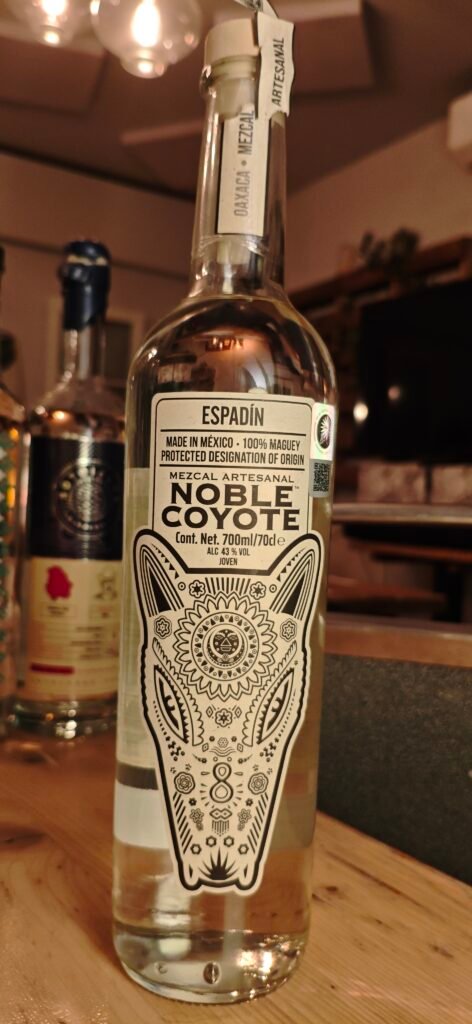
Noble Coyote – Espadín
Mezcal – 43%
Onto Mezcal. This is made of espadín agave, the most commonly used variety for mezcal. Noble Coyote produce mezcals using 4 different agaves they have available near their village home (cultivated and wild). On top of being sustainability-focused in their production methods (and using traditional tools like a horse-pulled rotating grinding stone), they are looking to safeguard the future of the industry and the agave plants themselves. Most cultivated agave is grown from cloned pups that can sprout from mature plants. This is often much more reliable and expedient than growing from seed, but it means that large portions of the industry rely on an extremely narrow genetic diversity profile. If a particular disease or insect susceptibility takes hold, it could be disastrous. Noble Coyote regularly send their team off into the wilds to forage for seeds from wild-grown agave to plant and nurture to introduce diversity and strength.
Flavourwise, for me this is what I’d been waiting for: a solid mezcal example of the earth and acid sweetness.
Notes: 👃🏻Smokey lime bread, little toffee, chlorine + rubber, pineapple, gherkins 👄Grapefruit, kiwi, gravel + tarmac, elderflower, peppery, rubber.
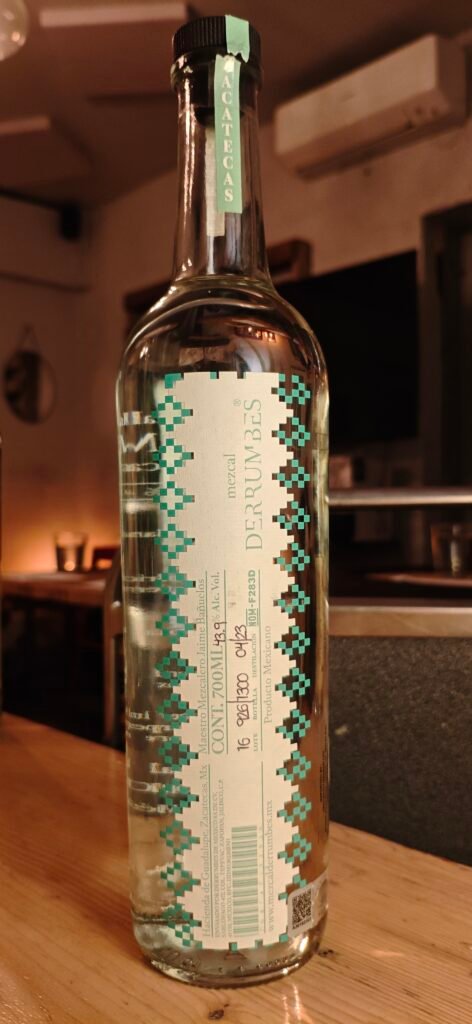
Derrumbes – Zacatecas
Mezcal – 43.9%
This photo is actually of the back of the bottle. I realised as I took it, but the front was near impossible to get a good photo of; being printed with a fine and gappy pattern meant I ended up with a picture of lots of shiny glass. So here’s the back – all of the info is there still.
Our second mezcal (both of which were unaged), but this one is made with Blue Weber agave (the variety used for tequila). So, why is it not tequila? Well, it’s back to those rules that spirit-making countries love so much. It is not made in the Jalisco state of Mexico, but in the neighbouring state of Zacatecas, and the agaves are smoked underground to prepare them, rather than being oven-steamed. It is this buried baking that gives mezcal a typically earthier and sometimes smokey note over tequila.
For me though, I found this walked a line somewhere between mezcal and tequila with its flavours, pulling in things from both, without particularly managing to strongly announce itself as either.
Notes: 👃🏻More vanilla, roast chicken crisps, green beans, smoked salmon 👄Sand, sweet, pecan pie, vegetal, chicken Oxo cube.
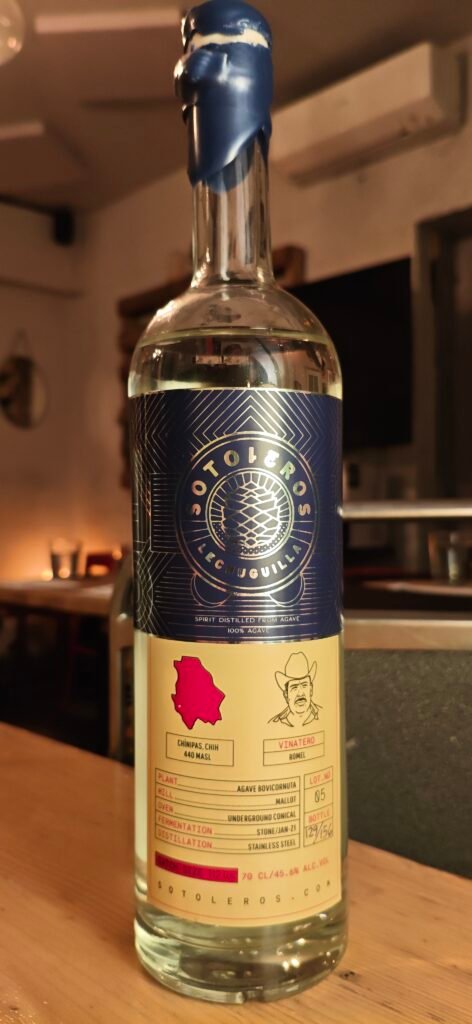
Sotoleros – Romel Lechuguilla Lot 5
Lechuguilla – 45.6%
Despite what The Whisky Exchange website says, this is not a Sotol; it is a Lechuguilla. Billy was clear (and apologetic) about that. It was also something crazy to end on (which is why I love a Billy Abbott line-up)!
The Sotoleros brand seems to be a sort of independent aggregator of Mexican spirits, working with farmers and producers in northern Mexico to release small batch discoveries, oddities and treasures. While Sotol (which they do release) is a Mexican spirit with rules for producers to follow like tequila and mezcal, it doesn’t use agave plants. Lechuguilla, on the other hand, is agave-based, but is more like Mexican moonshine, as it isn’t subject to strict guidelines yet.
Romel García, the man pictured on the bottle, makes this lechuguilla in Chihuahua from gathered wild agave, fermented in stone vats before distillation in steel pots with wooden lids. And, wow, the nose was something extremely unusual, such a fantastic choice to end on. The taste didn’t quite live up to the promise of the nose, but it was certainly still a pleasure to drink.
Notes: 👃🏻Super savoury meaty! Chipotle, Reggae Reggae Sauce, bergamot, cheesy👄Plastic + minerals, agave, tropical, grapefruit, herbal, little Oxo cube, cardboard, fries (earthy).
The Winners
Vote Winner: Bottle #4 – Noble Coyote Mezcal
Close Contenders: #6 – Romel Lechuguilla & #1 – Don Fulano Blanco
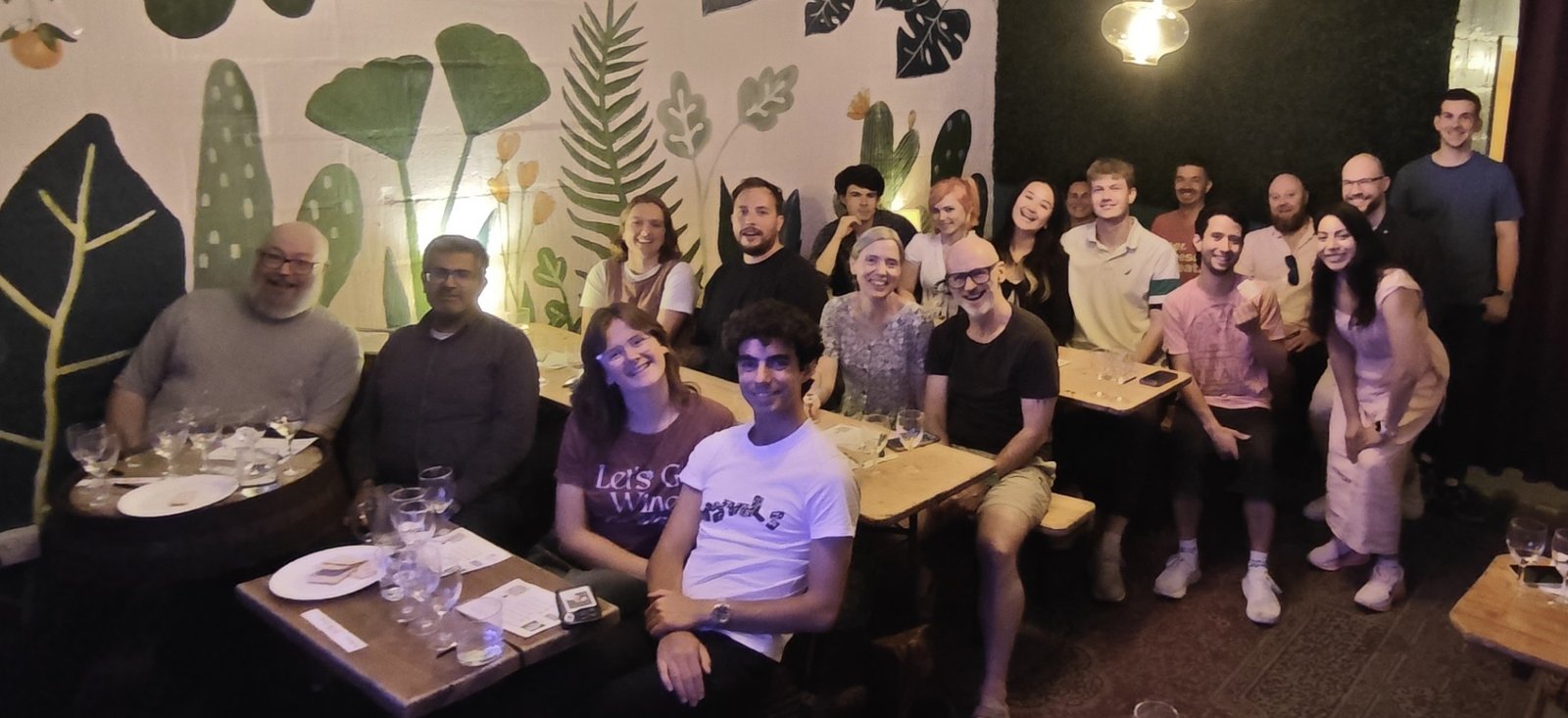
I can’t thank Billy enough for coming to see us and present this evening of adventure – in that sense, we were all winners for being sat there listening to Billy and drinking from his line-up. There was, of course, still a vote, and the mezcalliest mezcal of the night (in my opinion) was the victor.
Though the runners-up showed that people are both willing to get weird (with the lechuguilla) and favour traditional tequila too (with the Don Fulano). Ultimately, the vote outcome justifies to me that this introduction tasting, with its great spread of styles, was exactly what we needed, and gave people all sorts of things to discover and think about. I am sure I will present more adventures like this in the future!